

Market Outlook 2025: Expandable Prefabricated Container Housing Trends and Buyer Considerations
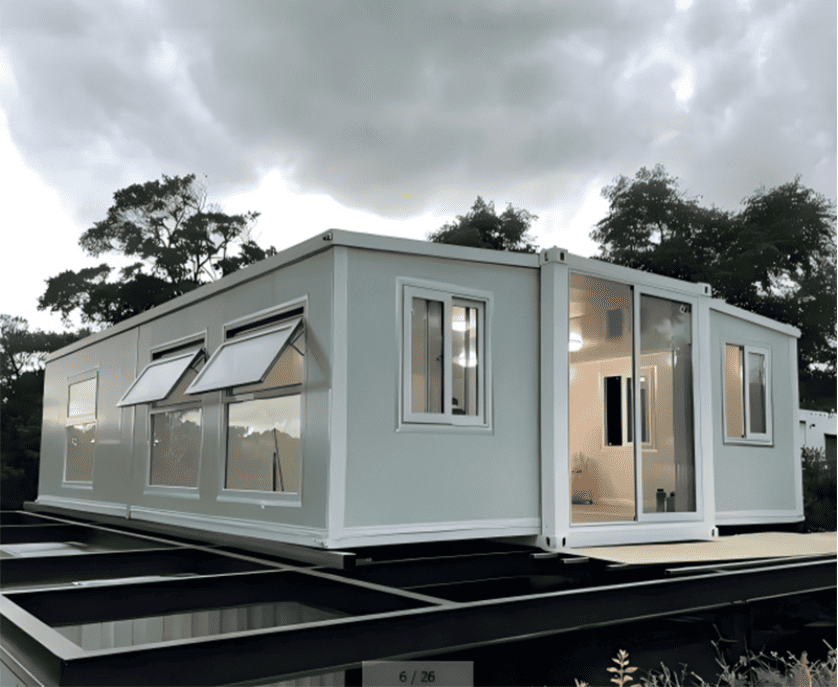
Based near Jiaodong International Airport and approximately 30 kilometers from Qingdao Port, Liansheng Assembly operates an integrated business model that includes housing customization, research and development, manufacturing, installation, and after-sales service. This logistical positioning supports efficient international distribution and reflects broader industry efforts to streamline global supply chains for prefabricated structures.
Industry Outlook: Modular Construction at a Turning Point
The global construction industry is undergoing structural change as prefabricated and modular building technologies gain wider acceptance. Looking toward 2025 and beyond, container-based housing is expected to play a growing role in addressing affordability, speed of delivery, and sustainability challenges across residential, commercial, and emergency-response sectors.
Market Growth and Demand Drivers
Industry analysts estimate that the container housing segment is currently valued at tens of billions of U.S. dollars and is projected to grow at a compound annual growth rate exceeding 6.5 percent through 2032. Several factors continue to support this expansion:
Housing affordability pressures: Rising land prices and conventional construction costs have increased interest in alternative building methods.
Urban expansion: Rapid development in emerging economies has created demand for scalable, quickly deployable housing and commercial infrastructure.
Disaster response and temporary accommodation: Container-based solutions are frequently adopted for their mobility and short installation timelines.
Shifting Buyer Priorities in 2025
Purchasing decisions in the modular housing market are increasingly shaped by factors beyond upfront cost alone.
Sustainability considerations: Reusable steel structures and factory-controlled production environments help reduce material waste and support energy-efficient designs.
Customization and adaptability: Buyers are moving toward flexible layouts, including expandable designs that increase usable floor area after delivery.
Logistics efficiency: Detachable and flat-pack configurations allow multiple units to be shipped in a single container, lowering transportation costs and simplifying international logistics.
Digital design integration: The use of 3D modeling and automated manufacturing tools continues to improve precision and shorten project timelines.
Quality, Compliance, and Risk Management
As modular construction scales globally, compliance with regional building codes and durability standards remains a priority. Buyers are advised to evaluate structural performance, corrosion protection, and certification alignment with local regulations when selecting suppliers.
Liansheng Assembly’s Operating Framework
Liansheng Assembly’s approach to prefabricated construction is guided by five principles: standardized design, environmental responsibility, modularity, universality, and reusability. These principles are intended to support consistent quality, simplified assembly, and long-term adaptability across project types.
A notable example referenced in the buyer’s guide is the 40ft Double-Wing Expandable House, which is designed to expand on site from a compact transport footprint into a larger functional space. Pricing for such units varies depending on configuration, insulation, interior fit-out, and certification requirements, reflecting broader market dynamics rather than fixed retail positioning.
Application Scenarios
Expandable and detachable container houses are currently used across multiple sectors, including:
Residential housing and hospitality developments
Construction site offices and workforce accommodation
Emergency relief housing and temporary medical facilities
Modular classrooms and training centers
In one recent infrastructure project in Africa, modular dormitory units were deployed to meet tight construction timelines while addressing corrosion resistance and transport efficiency requirements, illustrating how logistical design can influence overall project outcomes.
Outlook for Global Buyers
As modular construction adoption increases, buyers in 2025 are expected to prioritize durability, transport efficiency, regulatory compliance, and lifecycle value. The buyer’s guide emphasizes the importance of aligning technical specifications and logistics planning early in the procurement process.
About Liansheng Assembly
Liansheng Assembly is a modern industrial and trading enterprise specializing in the research, design, and production of prefabricated building systems. With more than ten years of industry experience and proximity to major shipping hubs, the company provides integrated services supporting modular construction projects worldwide.
For additional information, visit:
https://www.expand-house.com/
Liansheng Steve Building Technology (Shandong) Co., Ltd.
Liansheng Steve Building Technology (Shandong) Co., Ltd.
+86 193 5323 8558
lshousexcb@163.com
Legal Disclaimer:
EIN Presswire provides this news content "as is" without warranty of any kind. We do not accept any responsibility or liability for the accuracy, content, images, videos, licenses, completeness, legality, or reliability of the information contained in this article. If you have any complaints or copyright issues related to this article, kindly contact the author above.
