

Fragrance Ingredients Market Size to Reach USD 30.41 Billion by 2035, Driven by Sustainable Sourcing, AI Innovation, and Premiumization
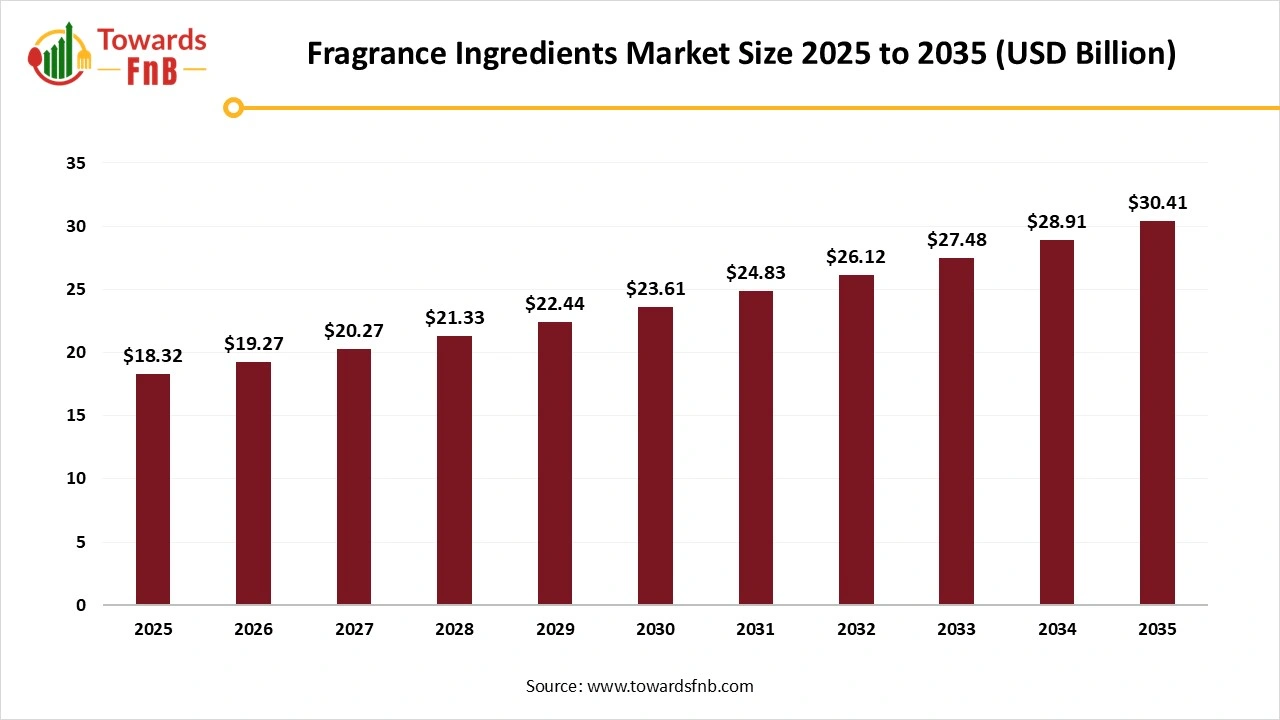
According to Towards FnB, the global fragrance ingredients market size is calculated at USD 19.27 billion in 2026 and is projected to reach USD 30.41 billion by 2035, registering a robust CAGR of 5.2% from 2026 to 2035, highlighting sustained expansion across fragrance formulation and ingredient supply chains. This growth trajectory reflects increasing investment in innovation, sustainable sourcing, and advanced formulation technologies across the global fragrance ecosystem.
Ottawa, Jan. 20, 2026 (GLOBE NEWSWIRE) -- The global fragrance ingredients market size stood at USD 18.32 billion in 2025 and is predicted to grow from USD 19.27 billion in 2026 to reach around USD 30.41 billion by 2035, as reported by Towards FnB, a sister firm of Precedence Research. The forecast is supported by comprehensive analysis of consumption trends, regulatory developments, and supply-side advancements shaping both natural and synthetic fragrance ingredient segments.
The market is observed to grow due to higher demand for cosmetics, soaps, detergents, and personal care products. Rising consumer preference for premium and customized fragrances and their use in various applications also helps to fuel the growth of the market.
Note: This report is readily available for immediate delivery. We can review it with you in a meeting to ensure data reliability and quality for decision-making.
Access the Full Study Instantly | Download Sample Pages of the Report Now@ https://www.towardsfnb.com/download-sample/5976
Why This Market Matters Now
The fragrance ingredients market is expanding against a backdrop of evolving consumer behavior, regulatory scrutiny, and rapid innovation. Rising demand for clean-label cosmetics, natural and bio-based fragrances, and emotion-enhancing scent solutions is reshaping sourcing strategies and accelerating R&D investment across fragrance houses and ingredient suppliers.
Key Highlights of Fragrance Ingredients Market
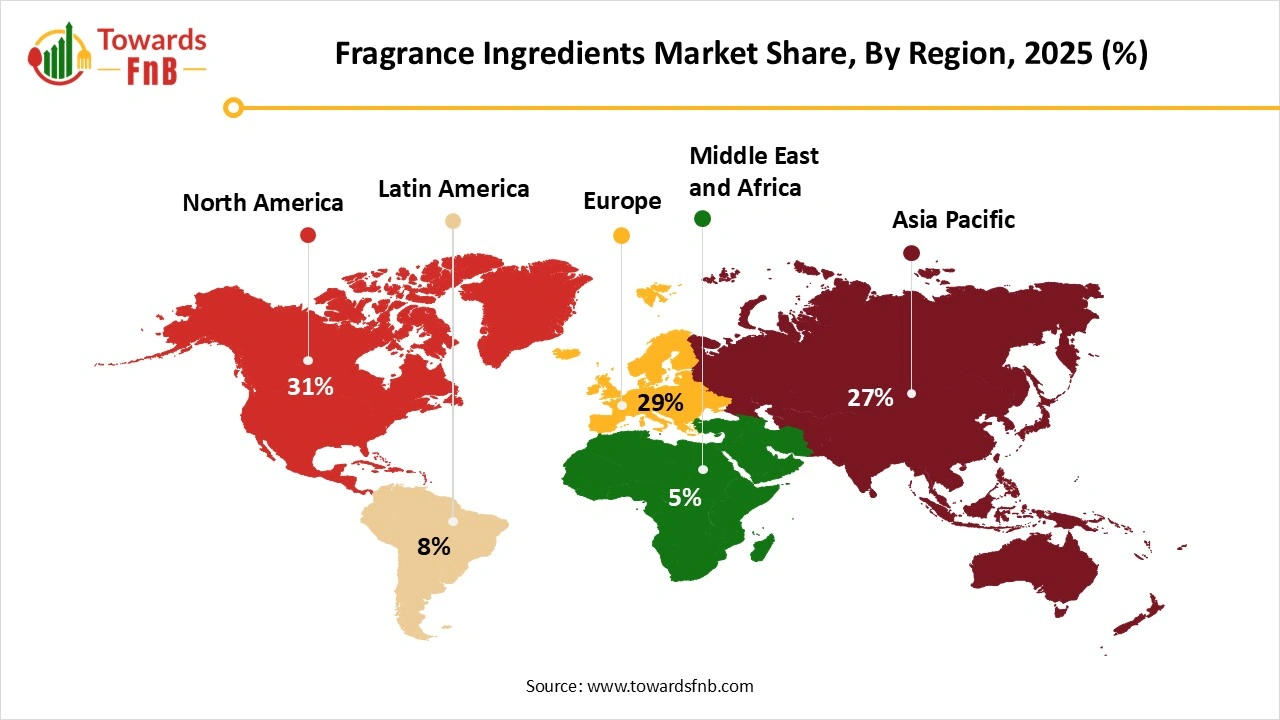
- By region, North America led the fragrance ingredients market with largest share of 31% in 2025.
- By region, the Asia Pacific is expected to grow in the foreseeable period.
- By type, the natural ingredients led the fragrance ingredients market in 2025.
- By type, the synthetic ingredients segment is observed to grow in the foreseen period.
- By application, the personal care segment led the fragrance ingredients market in 2025.
- By application, the hair care segment is expected to grow in the foreseeable period.
Higher Demand for Natural and Synthetic Compounds is helpful for the Growth of the Fragrance Ingredients Industry
The fragrance ingredients market is observed to grow due to rising demand for personal care products and innovation in synthetic fragrances. The market also observes growth due to higher demand for sustainable and natural fragrances. The market focuses on the manufacturing of scents useful for various applications such as personal care products, perfumes, cosmetics, food and beverages, detergents, and various other products.
Higher demand for premium and customized fragrances, especially in perfumes and cosmetic domains, also helps to propel the growth of the market. Innovations in sustainable and natural ingredients to avoid the usage of chemicals are another major option for the growth of the market. Technological advancements helpful for the creation of fragrances that help to elevate mood, lower stress, and provide various other functional benefits also help to fuel the growth of the market. Easy availability of different types of fragrances on various platforms also helps to fuel the fragrance ingredients market growth.
Technological Advancements Aiding the Growth of the Fragrance Ingredients Market
Technological advancements help in the innovation of unique and various types of fragrances, further fueling the growth of the market. It helps in maintaining the concentration of fragrance without disturbing its elegance and beauty. Microencapsulation, controlled-release methods, and fragrance-infused packaging are some of the highly utilized technological methods helpful for the growth of the market.
AI helps in the manufacturing of perfumes and fragrances suitable for skin chemistry, surroundings, and the mood of the individual. Hence, it further helps in aiding customization and personalization, further fueling the growth of the market. Biotechnology helps in following eco-friendly fragrance manufacturing methods to avoid the conventional resource-heavy production methods.
“Artificial intelligence and biotechnology are redefining the fragrance ingredients value chain by reducing development timelines, improving formulation precision, and enabling sustainable ingredient substitution at scale,” said Vidyesh Swar, Principal Consultant at Towards FnB. “These technologies are no longer experimental, they are becoming core capabilities for competitive fragrance suppliers.”
Impact of AI in the Fragrance Ingredients Market
Artificial intelligence is increasingly shaping the fragrance ingredients market by transforming molecule discovery, formulation design, and demand forecasting across fine fragrances, personal care, and household products. Machine learning models are used to analyze vast chemical libraries and olfactory datasets to predict scent profiles, volatility, stability, and interaction effects between aroma molecules, enabling faster identification of novel fragrance ingredients and optimized blends with fewer physical trials.
In formulation development, AI supports precise balancing of top, heart, and base notes by simulating how fragrance compounds evolve over time and under different environmental conditions, such as heat, light exposure, and pH, which is critical for performance in soaps, detergents, and cosmetics. AI is also applied in raw material substitution, where predictive tools help reformulate fragrances to maintain olfactory consistency despite natural ingredient variability, supply disruptions, or regulatory restrictions. From a commercial perspective, AI-driven analytics are used to align ingredient portfolios with regional consumer preferences by mapping scent trends, cultural affinities, and product usage data across end markets.
On the regulatory and safety front, AI assists in toxicological screening and compliance assessment by evaluating ingredient exposure levels and allergen risks in line with standards and guidance issued by organizations such as the International Fragrance Association and regulatory frameworks enforced by the European Chemicals Agency. Overall, AI functions as an innovation accelerator and risk-management tool in the fragrance ingredients market, enabling suppliers to shorten development cycles, ensure regulatory compliance, and deliver consistent sensory performance at scale.
View Full Market Intelligence@ https://www.towardsfnb.com/insights/fragrance-ingredients-market
Recent Developments in the Fragrance Ingredients Market
- In July 2025, Debut, the biotech beauty leader, announced the launch of a plant cell biotechnology platform. The platform allows the creation of fragrance ingredients from simple to complex molecules without the need for cultivation.
- In March 2025, Isobionics, a biotechnology brand of BASF Aroma Ingredients, launched its two new natural ingredients in the flavor domain- Isobionics Natural beta-Sinensal 20 and Isobionics Natural alpha-Humulene 90. These are produced using an innovative cutting-edge fermentation process.
New Trends of Fragrance Ingredients Market
- Higher demand for scents derived with the help of biotechnological methods is one of the major factors for the growth of the market.
- Higher demand for natural, organic, and herbal plant-derived scents also helps to fuel the growth of the market.
- Higher demand for premiumization, customization, and gender-neutral fragrances is another major factor for the growth of the market.
- Higher demand for functional and aromatherapy fragrances also elevates the growth of the market.
- Transparency and traceability, allowing consumers to keep a tap on sourcing methods and ingredients used in the manufacturing of fragrances, also help to fuel the growth of the market.
Product Survey of the Fragrance Ingredients Market
| Product Category | Description or Function | Common Forms or Variants | Key Applications or User Segments | Representative Brands or Product Types |
| Aroma Chemicals | Synthetic or nature-identical molecules that provide specific odor notes | Aldehydes, musks, esters, ketones | Fine fragrance houses, personal care manufacturers | Synthetic aroma chemical portfolios |
| Natural Essential Oils | Volatile aromatic oils extracted from plant materials | Citrus oils, floral oils, spice oils | Fine fragrance, cosmetics, aromatherapy | Steam-distilled and cold-pressed oils |
| Oleoresins | Concentrated extracts containing both volatile and non-volatile aromatic compounds | Spice oleoresins, herb oleoresins | Fragrance compounding, flavor and fragrance houses | Botanical oleoresin extracts |
| Terpenes and Terpenoids | Hydrocarbon-based aroma compounds derived from natural or synthetic sources | Limonene, pinene, linalool | Fragrance manufacturers, household care brands | Terpene-based fragrance ingredients |
| Musk Compounds | Fixatives that provide longevity and depth to fragrance compositions | Nitro musks, polycyclic musks, macrocyclic musks | Fine fragrances, personal care products | Modern synthetic musk systems |
| Fixatives and Stabilizers | Ingredients that enhance fragrance stability and longevity | Benzyl benzoate, resinoids, balsams | Perfume manufacturers, cosmetic formulators | Fragrance fixation agents |
| Aroma Blends and Bases | Pre-formulated fragrance accords used as building blocks | Floral bases, woody bases, oriental bases | Fragrance houses, contract manufacturers | Ready-to-use fragrance bases |
| Bio-Based Fragrance Ingredients | Fermentation- or biotech-derived aroma molecules | Bio-identical vanillin, bio-based musks | Sustainable fragrance brands | Biotechnology-derived aroma ingredients |
| Encapsulated Fragrance Systems | Fragrance ingredients encapsulated for controlled release | Microencapsulated fragrance beads | Detergents, fabric care, household products | Encapsulation fragrance technologies |
| Specialty Fragrance Ingredients | High-value or niche aromatic materials with unique olfactory profiles | Rare naturals, captive molecules | Luxury perfume brands | Specialty and captive fragrance ingredients |
For Detailed Pricing and Tailored Market Report Options, Click Here: https://www.towardsfnb.com/checkout/5976
Fragrance Ingredients Market Dynamics
What are the Growth Drivers of the Fragrance Ingredients Market?
Higher application of fragrances in different domains such as personal care products, cosmetics, perfumes, soaps, detergents, and even food and beverages is one of the biggest drivers of the market. Higher demand for scents obtained with the help of natural and sustainable methods to avoid higher usage of chemicals is another major factor for the growth of the market. Technological advancements allowing the fragrance manufacturers use sustainable, natural, and innovative methods for the creation of novel fragrances are another major factor for the growth of the market. Hence, such factors altogether help to fuel the growth of the market.
Higher Costs of Natural Ingredients are hampering the Growth of the Market
Higher costs of natural ingredients for the sustainable production of fragrances are one of the major restrictions for the growth of the market. The elevated costs of the natural ingredients involve the costs of the cultivation, harvesting, and extraction of natural ingredients, further restraining the market’s growth. Such procedures affect the final price of the product, restraining the growth of the market. Geopolitical issues and climatic conditions obstructing the supply chain also affect the market’s growth.
Higher Demand for Natural Fragrances Aids the Growth of the Market
Higher demand for fragrances derived from natural sources such as essential oils, botanical extracts, and natural aroma is one of the major opportunities for the growth of the market. It helps to maintain sustainability and allows manufacturers to opt for eco-friendly extraction methods, further fueling the growth of the market. Use of technological methods to enhance the fragrance of natural scents and elevate the product quality also helps to fuel the growth of the market.
Fragrance Ingredients Market Regional Analysis
North America Dominated the Fragrance Ingredients Market in 2025
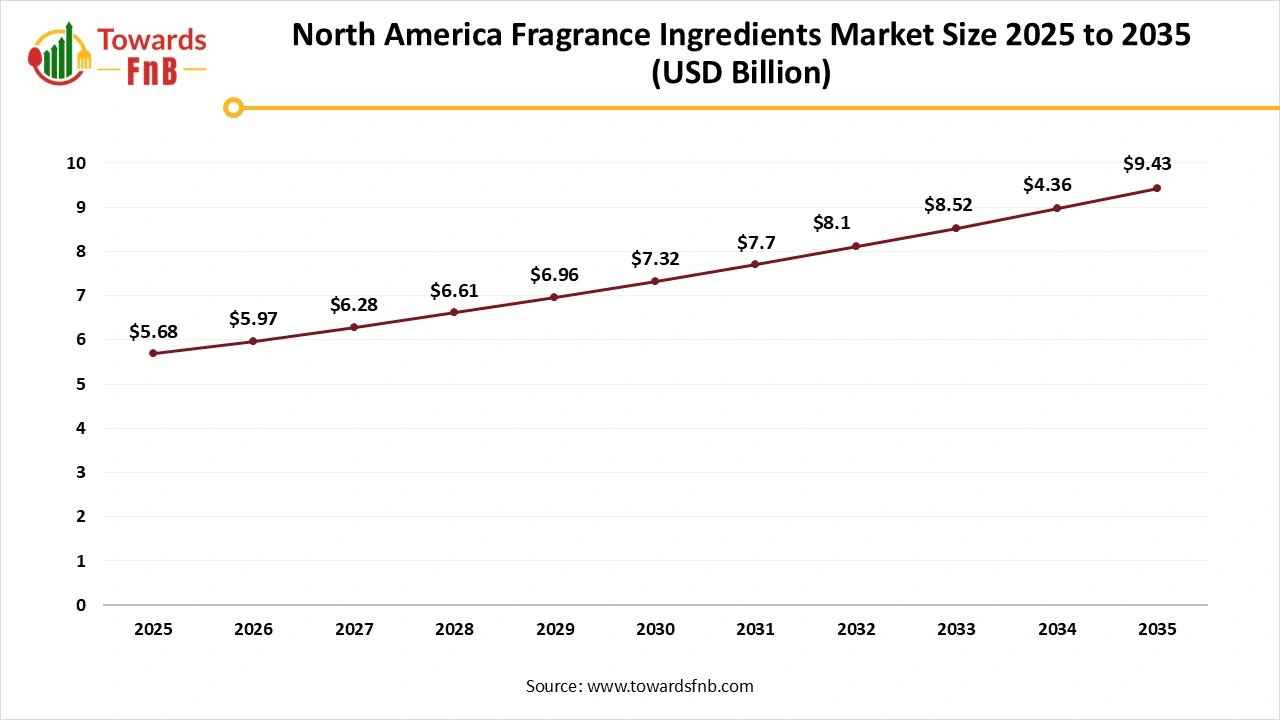
North America led the fragrance ingredients market in 2025, due to higher demand for sustainable and natural fragrances. Higher demand for fragrant options in different domains, such as perfumes, personal care products, cosmetics, soaps, and scented candles, also helps to fuel the growth of the market. Sustainably made fragrances that are durable and also clean-label also propel the market’s growth in the region. The US has a major role in the growth of the market due to the higher demand for cosmetics, beauty, and personal care products in the region.
Asia Pacific is Observed to be the Fastest-Growing Region in the Foreseen Period
Asia Pacific is observed to be the fastest-growing region in the foreseen period due to the higher availability of different types of fragrances. Higher availability of natural fragrances derived through natural means also helps to fuel the growth of the market. Higher demand for different types of fragrances defining various cultures is another major factor fueling the growth of the market. India has made a major contribution to the growth of the market, mainly due to factors such as increasing disposable income, rapid urbanization, and changing lifestyles, leading to the growth of the market in the foreseen period.
Europe is observed to have a Notable Growth in the Foreseen Period
Europe is observed to have a notable growth in the foreseen period due to higher demand for fragrant personal care products and cosmetics in the region. Higher demand for natural scents and fragrances derived through sustainable means also helps to fuel the growth of the market. The UK has a major role in the growth of the market of the region due to higher demand for natural and sustainable cosmetics and personal care products.
Trade Analysis for the Fragrance Ingredients Market
What Is Actually Traded (Product Forms and HS Proxies)
- Synthetic aroma chemicals, including aldehydes, ketones, esters, and musks used in fine fragrances and consumer products, are commonly traded under HS 2912, HS 2914, and HS 2915 depending on chemical class.
- Essential oils and oleoresins derived from citrus, floral, spice, and herb sources are typically classified under HS 3301 (essential oils; concentrates; terpenic by-products).
- Blended fragrance compounds supplied as proprietary formulations for perfumes, personal care, and household products are generally cleared under HS 3302 (mixtures of odoriferous substances).
- Natural aroma isolates, such as vanillin, linalool, and citral when derived from natural feedstocks, are commonly traded under HS 2912 or HS 2915 depending on structure.
-
Carrier solvents and functional fragrance bases, when supplied as part of finished fragrance systems, are usually classified under HS 3302.
Top Exporters (Supply Hubs)
- France: Leading exporter of fragrance ingredients and compounded fragrance blends supported by strong perfumery heritage and advanced formulation capabilities.
- Switzerland: Major exporter of high-value aroma chemicals and fragrance compounds linked to multinational fragrance houses and advanced R&D.
- Germany: Exporter of synthetic aroma chemicals and intermediates supported by large-scale chemical manufacturing and regulatory compliance expertise.
- China: Large-volume exporter of synthetic fragrance intermediates and essential oil derivatives with competitive production costs.
Top Importers (Demand Centres)
- United States: Significant importer of fragrance ingredients driven by large personal care, home care, and fine fragrance manufacturing bases.
- European Union: Strong intra-EU and extra-EU imports reflecting concentration of fragrance formulation, cosmetics, and consumer goods manufacturing.
- India: Growing importer of aroma chemicals and fragrance blends used in personal care, agarbatti, and household products.
- Brazil: Imports fragrance ingredients to support large domestic cosmetics, toiletries, and cleaning product industries.
Typical Trade Flows and Logistics Patterns
- Synthetic aroma chemicals and essential oils are shipped primarily via containerized sea freight in sealed drums or IBCs.
- High-value fragrance compounds may be shipped by air freight to ensure supply chain responsiveness and product integrity.
- Temperature control and light protection are used for sensitive essential oils and natural isolates.
- Regional compounding facilities customize fragrance blends prior to delivery to end-product manufacturers.
Trade Drivers and Structural Factors
- Growth in personal care, cosmetics, and home care consumption sustains demand for fragrance ingredients.
- Product differentiation and brand positioning increase reliance on proprietary fragrance blends.
- Natural and sustainable sourcing trends influence trade toward essential oils and bio-based aroma chemicals.
- Cost and availability of natural raw materials drive substitution with synthetic alternatives.
- Intellectual property concentration shapes supplier selection and trade dependence.
Regulatory, Quality, and Market-Access Considerations
- Fragrance ingredients must comply with chemical safety, labeling, and usage restrictions imposed by national authorities.
- Restrictions on allergens and hazardous substances influence formulation and trade eligibility.
- Documentation covering composition, safety data, and traceability is required for import clearance.
- Compliance with international fragrance standards affects access to regulated consumer markets.
Government Initiatives and Public-Policy Influences
- Chemical safety regulations and consumer protection frameworks influence ingredient approval and trade flows.
- Sustainability and environmental policies affect sourcing of natural fragrance materials.
- Trade facilitation measures and customs procedures impact cross-border movement of fragrance ingredients.
Fragrance Ingredients Market Report Scope
| Report Attribute | Key Statistics |
| Base Year | 2025 |
| Forecast Period | 2026 to 2035 |
| Growth Rate from 2026 to 2035 | CAGR of 5.2% |
| Market Size in 2026 | USD 19.27 Billion |
| Market Size in 2027 | USD 20.27 Billion |
| Market Size in 2030 | USD 23.61 Billion |
| Market Size by 2035 | USD 30.41 Billion |
| Dominated Region | North America |
| Fastest Growing Region | Asia Pacific |
| Regions Covered | North America, Europe, Asia-Pacific, Latin America and Middle East & Africa |
Have Questions? Let’s Talk—Schedule a Meeting with Our Insights Team: https://www.towardsfnb.com/schedule-meeting
Fragrance Ingredients Market Segmental Analysis
Type Analysis
The natural ingredients segment led the fragrance ingredients market in 2025, due to higher demand for sustainable and natural ingredients, fueling the growth of the market. Higher demand for plant-derived, eco-friendly formulations and chemical-free methods is another major factor for the growth of the market. It highlights the preference and acceptance for natural scents and fragrance derived from natural ingredients, fueling the growth of the market. Usage of natural fragrances in personal care products, soaps, detergents, cosmetics, and perfumes also helps to fuel the growth of the market.
The synthetic ingredients segment is expected to grow in the foreseen period due to its cost-effective nature, which is helpful for the manufacturing of fragrances for different domains on a large scale. Manufacturing of synthetic fragrances requires less cost compared to manufacturing of natural fragrances, which requires the collection of natural ingredients and their high-cost processing. The fragrance derived through synthetic processes is consistent compared to natural fragrances, which may vary in different batches. Hence, the segment has a major role in the growth of the fragrance ingredients market in the foreseeable period.
Application Analysis
The personal care segment led the fragrance ingredients market in 2025, due to higher demand for fragrant options in the personal care product domain. Higher demand for fragrant soaps, cosmetics, oral care products, toiletries, and other similar products helps to fuel the growth of the market. Higher demand for fragrant skin care products and cosmetics is one of the major factors fueling the growth of the market. Higher demand for distillates, oleoresins, fractions, concretes, and absolutes in perfumes and soaps also helps to fuel the growth of the market.
The hair care segment is expected to grow in the foreseen period due to higher demand for hair care products that have a pleasant fragrance and that are also mild on hair and scalp. Higher demand for products made from clean-label and sustainable ingredients that help to enhance hair quality also helps to fuel the market’s growth. Hence, hair care brands are doing research and development for the manufacturing of innovative options that are fragrant and mild for healthy hair.
Feel Free to Get in Touch with Us for Orders or Any Questions at: sales@towardsfnb.com
Additional Topics Worth Exploring:
- Tea Market: The global tea market size is projected to expand from USD 30.25 billion in 2025 to USD 54.68 billion by 2034, growing at a CAGR of 6.8% during the forecast period from 2025 to 2034.
- Gluten Free Food Market: The global gluten free food market size is increasing from USD 15.71 billion in 2026 and is expected to surpass USD 37.04 billion by 2035, with a projected CAGR of 10% during the forecast period from 2026 to 2035.
- Organic Food Market: The global organic food market size is expected to grow from USD 253.96 billion in 2025 to USD 660.25 billion by 2034, with a compound annual growth rate (CAGR) of 11.20% during the forecast period from 2025 to 2034.
- Canned Food Market: The global canned food market size is projected to expand from USD 144.43 billion in 2026 to reach around USD 218.37 billion by 2035, growing at a CAGR of 4.7% during the forecast period from 2026 to 2035.
- Dietary Supplements Market: The global dietary supplements market size is projected to reach USD 507.33 billion by 2035, growing from USD 229.77 billion in 2026, at a CAGR of 9.2% from 2026 to 2035.
- Canned Wines Market: The global canned wines market size is expected to increase from USD 142.20 million in 2026 to reach around USD 369.70 million by 2035, growing at a CAGR of 11.2% throughout the forecast period from 2026 to 2035.
- Plant-based Protein Market: The global plant-based protein market size is forecasted to expand from USD 22.10 billion in 2026 and is expected to reach USD 46.82 billion by 2035, growing at a CAGR of 8.7% during the forecast period from 2026 to 2035.
- Frozen Food Market: The global frozen food market size is expected to grow from USD 473.40 billion in 2026 to reach around USD 721.91 billion by 2035, at a CAGR of 4.8% over the forecast period from 2025 to 2034.
- Beverage Packaging Market: The global beverage packaging market size is projected to reach USD 285.66 billion by 2035, growing from USD 182.57 billion in 2026, at a CAGR of 5.1% during the forecast period from 2026 to 2035.
- Vegan Food Market: The global vegan food market size is evaluated at USD 24.77 billion in 2026 and is expected to reach USD 61.85 billion by 2034, with a CAGR of 10.7% during the forecast period from 2025 to 2034.
- Food Additives Market: The global food additives market size is rising from USD 128.14 billion in 2025 to USD 214.66 billion by 2034. This projected expansion reflects a CAGR of 5.9% throughout the forecast period from 2025 to 2034.
- Coconut Products Market: The global coconut products market size is expected to climb from USD 14.18 billion in 2025 to approximately USD 33.71 billion by 2034, growing at a CAGR of 10.1% during the forecast from 2025 to 2034.
Major Players Overview and Strategic Impact in the Fragrance Ingredients Industry
- Symrise: Symrise is a global leader in fragrance ingredients, offering a broad portfolio of natural extracts, synthetic aroma chemicals, and application-specific scent solutions. Its vertically integrated operations and focus on sustainable sourcing and biotechnology enable the company to deliver scalable, regulatory-compliant fragrance ingredients, strengthening its role as a strategic partner to multinational FMCG brands.
- DSM-Firmenich: DSM-Firmenich combines fragrance expertise with biosciences and advanced fermentation technologies to develop sustainable, bio-based aroma ingredients. Its strategic emphasis on ESG-aligned innovation positions the company as a key driver of next-generation fragrance sourcing and long-term sustainability transformation across the industry.
- Givaudan S.A.: Givaudan is the world’s largest fragrance and flavor company, distinguished by its extensive R&D capabilities and leadership in AI-driven fragrance creation. Through proprietary technologies, captive molecules, and strong intellectual property, the company shapes global fragrance trends while maintaining high competitive barriers within the fragrance ingredients market.
- Takasago International Corporation: Takasago International Corporation is a major fragrance ingredients manufacturer with strong expertise in aroma chemicals and natural ingredients, particularly across Asia-Pacific markets. Its ability to combine traditional perfumery knowledge with modern formulation science supports localized innovation and strengthens its strategic presence in high-growth regions.
- Sensient Technologies Corporation: Sensient Technologies focuses on high-value specialty fragrance ingredients and customized sensory solutions for personal care and household products. Its strength lies in rapid development, formulation flexibility, and serving niche and mid-sized brands seeking differentiated fragrance profiles and faster time-to-market.
- Robertet: Robertet is a leading producer of natural fragrance ingredients, supported by vertically integrated operations from cultivation to extraction and formulation. The company plays a strategic role in advancing clean-label and traceable fragrance solutions, particularly for premium fragrance and cosmetics brands.
-
Mane: Mane is a family-owned fragrance and flavor company recognized for its creative perfumery expertise and innovation-led approach. Its strategic focus on co-creation and customization allows it to compete effectively in fine fragrances and personal care, positioning fragrance ingredients as a tool for brand differentiation and emotional engagement.
Segments Covered in the Report
By Type
- Natural
- Synthetic
By Application
- Hair Care
- Personal Care
- Fabric Care
- Others
By Region
North America
- U.S.
- Canada
Asia Pacific
- China
- Japan
- India
- South Korea
- Thailand
Europe
- Germany
- UK
- France
- Italy
- Spain
- Sweden
- Denmark
- Norway
Latin America
- Brazil
- Mexico
- Argentina
Middle East and Africa (MEA)
- South Africa
- UAE
- Saudi Arabia
- Kuwait
Thank you for exploring our insights. For more targeted information, customized chapter-wise sections and region-specific editions such as North America, Europe, or Asia Pacific—are also available upon request.
For Detailed Pricing and Tailored Market Report Options, Click Here: https://www.towardsfnb.com/checkout/5976
Feel Free to Get in Touch with Us for Orders or Any Questions at: sales@towardsfnb.com
Unlock expert insights, custom research, and premium support with the Towards FnB Annual Membership. For USD 495/month (billed annually), get full access to exclusive F&B market data and personalized guidance. It’s your strategic edge in the food and beverage industry: https://www.towardsfnb.com/get-an-annual-membership
About Us
Towards FnB is a global consulting firm specializing in the food and beverage industry, providing innovative solutions and expert guidance to elevate businesses. With an in-depth understanding of the dynamic F&B sector, we deliver customized market analysis and strategic insights. Our team of seasoned professionals is committed to empowering clients with the knowledge needed to make informed decisions, ensuring they stay ahead of market trends. Partner with us as we redefine success in the rapidly evolving food and beverage landscape, and together, we’ll navigate this transformative journey.
Web: https://www.towardsfnb.com/
Our Trusted Data Partners
Precedence Research | Statifacts | Towards Packaging | Towards Chemical and Materials| Nova One Advisor | Food Beverage Strategies | FnB Market Pulse | Nutraceuticals Func Foods | Onco Quant | Sustainability Quant | Specialty Chemicals Analytics
For Latest Update Follow Us:
Discover More Market Trends and Insights from Towards FnB:
➡️Beverage Flavors Market: https://www.towardsfnb.com/insights/beverage-flavors-market
➡️Salt Market: https://www.towardsfnb.com/insights/salt-market
➡️Probiotic Food Market: https://www.towardsfnb.com/insights/probiotic-food-market
➡️Protein Bar Market: https://www.towardsfnb.com/insights/protein-bar-market
➡️Gluten-Free Bakery Market: https://www.towardsfnb.com/insights/gluten-free-bakery-market
➡️Europe Nutraceuticals Market: https://www.towardsfnb.com/insights/europe-nutraceuticals-market
➡️Canned Food Market: https://www.towardsfnb.com/insights/canned-food-market
➡️Non-Alcoholic Beverages Market: https://www.towardsfnb.com/insights/non-alcoholic-beverages-market
➡️Dry Fruit Market: https://www.towardsfnb.com/insights/dry-fruit-market
➡️Frozen Meat Market: https://www.towardsfnb.com/insights/frozen-meat-market
➡️Fish Oil Market: https://www.towardsfnb.com/insights/fish-oil-market
➡️Soft Drink Concentrates Market: https://www.towardsfnb.com/insights/soft-drink-concentrates-market
➡️Meal Kits Market: https://www.towardsfnb.com/insights/meal-kits-market
➡️Ethnic Food Market: https://www.towardsfnb.com/insights/ethnic-food-market


Legal Disclaimer:
EIN Presswire provides this news content "as is" without warranty of any kind. We do not accept any responsibility or liability for the accuracy, content, images, videos, licenses, completeness, legality, or reliability of the information contained in this article. If you have any complaints or copyright issues related to this article, kindly contact the author above.
